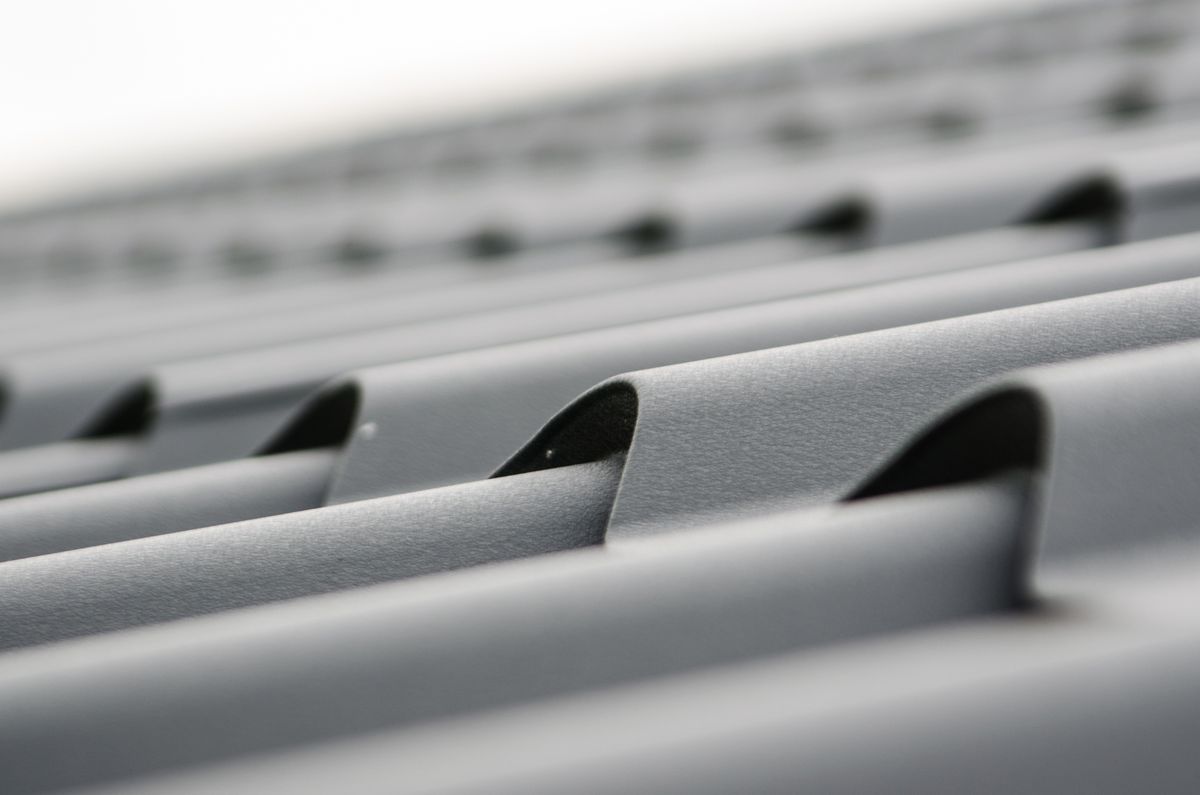
Name the metal system before comparing anything
Metal roofs include standing-seam panels, exposed-fastener panels, metal shingles, and other profiles. They do not all share the same fastening arrangement, slope limits, maintenance needs, or appearance. A photograph of one system cannot stand in for a specification for another.
Ask for the proposed panel or tile profile, metal, finish, fastening method, and applicable installation instructions. If the estimate says only “metal roof,” it is too early for a meaningful comparison. Do the same for asphalt: identify the shingle line and accessories rather than treating every architectural shingle as identical. Once both options are specified, compare how each handles the actual roof's valleys, walls, penetrations, and lower slopes. Those details can change both the work and the ownership experience.
Separate concealed and exposed fastening
Some metal systems conceal their principal attachments within the assembly, while exposed-fastener systems have fasteners passing through the weather surface in defined locations. That distinction affects the details that need inspection and maintenance. It does not, by itself, prove that one particular installation is suitable or unsuitable.
The SFS fastener explanation is useful background for the terminology. Ask the contractor which fastening arrangement is proposed and what the manufacturer's maintenance guidance requires. “No screws visible” is a visual description, not a complete quality assessment. Likewise, visible screws are not automatically a defect in a system designed to use them. The installation must be evaluated against the selected system, not against a different metal roof seen online.
Compare the same removal and deck work
One metal proposal may assume an overlay while a shingle proposal includes full removal. Those totals do not describe the same preparation. Ask each contractor to identify existing layers, the planned removal, and how the supporting surface will be evaluated.
If an overlay is proposed, ask what remains concealed and why the chosen assembly is appropriate for that condition. Do not assume that a lightweight or long-lasting covering makes hidden deterioration irrelevant. For a Warwick house with several earlier repairs, the inspection record may be as important as the covering choice. Compare preparation, hidden-work allowances, and structural concerns on the same basis before attributing every price difference to the visible material.
Let roof geometry affect the choice
Long simple roof planes and roofs with many short sections, dormers, and valleys present different fabrication and installation questions. Metal panel layout, transition details, and cutting can become more involved around complex geometry. Asphalt installation also becomes more detailed at those interruptions.
Ask each contractor to show how the selected system handles the actual roof rather than showing only photographs of simple gables. Include porches and low-slope sections in the diagram. A house does not need one material on every plane, but mixed systems need clear transitions. The material comparison should identify any section excluded from the base proposal and explain why a different covering is recommended there. Otherwise, a seemingly comprehensive quote may leave the hardest part of the roof unresolved.
Understand movement and detailing
Metal changes dimension with temperature. The selected system's attachments, panel lengths, seams, and transitions need to accommodate the behavior expected by its design. This is one reason a metal roof is more than sheets fastened to a surface.
The Metal Construction Association installation manual provides technical background on metal roofing systems. As a homeowner, ask how the proposed profile is attached and what details govern transitions and penetrations. You do not need to design clips or fastener spacing yourself. You need the contractor to identify the product and follow the applicable design. A generic promise of “heavy gauge metal” does not answer how the roof will manage movement at a wall or around a pipe.
Discuss snow and ice over occupied areas
Snow and ice behavior can change with the roof surface and geometry. Ask whether the proposed metal roof needs a designed snow-retention arrangement above doors, walkways, parking, or lower roofs. Do not assume that snow sliding off is always a benefit.
The roof plan should identify places where falling snow or ice could affect people or property. Any retention system needs to be compatible with the roof and properly specified; it is not simply a decorative accessory to add later wherever it looks convenient. Also keep ice-dam prevention separate from snow retention. One manages snow movement on the surface, while the other concerns the conditions that produce melting and refreezing. A proposal should explain which problem each component is intended to address.
Ask about the whole assembly when discussing noise
People often compare metal and shingles by imagining rain striking a bare sheet. An occupied house has an assembly beneath the covering, and interior sound depends on more than the outer material. Ask how the proposed roof will be built over the existing deck and interior conditions.
If sound is a major concern, ask to discuss a comparable completed assembly rather than relying on a universal promise that metal is silent or noisy. A roof over an open porch can sound different from a roof over an insulated room. Tell the contractor which spaces matter to you. The useful comparison keeps the supporting layers and interior use consistent, rather than comparing a residential roof with a shed or an unlined agricultural building.
Treat finish appearance and performance separately
Metal finish, color, texture, and profile affect appearance. They also come with specific product information and warranty terms. Ask what finish is proposed and what the warranty actually addresses, including any distinctions between coating performance and water leakage.
Look at samples outdoors and, if possible, at a relevant completed roof from a safe public location. Changes in light can affect how broad metal surfaces look. Do not infer structural or water-management quality solely from surface appearance. Ask the contractor to explain any expected visual characteristics of the selected profile before installation. For asphalt, make the same effort to identify the exact color and product, rather than choosing from a small image that does not show the scale of a full roof plane.
Compare repairs as future tasks
Ask how a future damaged area would be repaired in each system. Replacement shingles, metal panels, clips, finish matching, and access can present different practical issues. A repair question does not mean assuming the new roof will fail; it means understanding how ownership works.
For a long panel or a complicated intersection, ask what surrounding work might be disturbed during a repair. For shingles, ask about product identification and future matching limitations. Keep leftover material only if the contractor recommends it and you can store it appropriately. The most useful record is the exact installed product and a roof diagram. Without that information, a future provider may spend time identifying the system before even assessing the damaged detail.
Avoid universal lifespan arithmetic
A broad lifespan claim cannot tell you how long a particular installation will perform on your house. Product, detailing, exposure, maintenance, and the supporting assembly all matter. Warranty duration is also not the same thing as a predicted replacement date.
Instead of comparing “one roof lasts twice as long,” ask what maintenance and inspections each proposed system requires and what conditions are excluded from coverage. Consider your expected ownership period without pretending it predicts the roof's life. If you use a cost comparison, state the assumptions and test different scenarios. A useful household calculation might compare initial cost plus identified maintenance allowances over a chosen period. It should not assign an unsupported resale premium or guaranteed future replacement date to make one option win.
Keep solar and other attachments in the comparison
If the house has or may receive solar panels, tell the roof contractors before finalizing the design. Attachments and service access need coordination with the selected roof system. Ask who approves compatible mounting details and who will handle future equipment removal if necessary.
Do not assume every metal profile allows the same attachment method or that every asphalt roof has identical penetration details. Equipment decisions should follow the actual system. The same applies to antennas, exhaust equipment, and other roof-mounted items. A material comparison that prices an empty roof while ignoring known equipment is incomplete. Keep the equipment scope, roof scope, and responsibility for their shared details together so that later work does not become an improvised modification.
Put maintenance obligations next to the price
Request the manufacturer's maintenance guidance and the installer's follow-up terms for each option. Identify what can be observed from the ground and what requires a professional visit. Ask how debris, damaged coatings, exposed fasteners where present, seams, and penetrations should be monitored for the selected system.
For asphalt, IKO's roofing FAQ offers general product background, but it does not replace the instructions for your chosen line. The same principle applies to metal manuals. A low-maintenance claim should be supported by a specific system and a realistic plan. “Maintenance free” is not a useful substitute for knowing what to inspect, how to report damage, and which actions could affect warranty coverage.
Make the final comparison small enough to use
Create a one-page table listing the exact covering, removal, deck work, flashing, ventilation or assembly work, snow-management components where needed, warranty documents, and maintenance responsibilities. Put unstated items in a separate question list and request a revised proposal.
Then choose among complete options that fit the house. A metal roof can be a sensible choice, and so can asphalt shingles. The decision should follow the roof's geometry, the specified details, your appearance preference, and the costs and responsibilities actually documented. A useful comparison leaves you able to explain why the selected assembly fits this Warwick property, without relying on a slogan about which material is universally best.