Begin by identifying the roof covering
Asphalt shingles, clay tiles, concrete tiles, metal, and wood products have different surfaces and maintenance requirements. A method used on a neighbor's roof may be unsuitable for yours. Start with the installed product if records exist, and ask the provider to identify the material before proposing treatment.
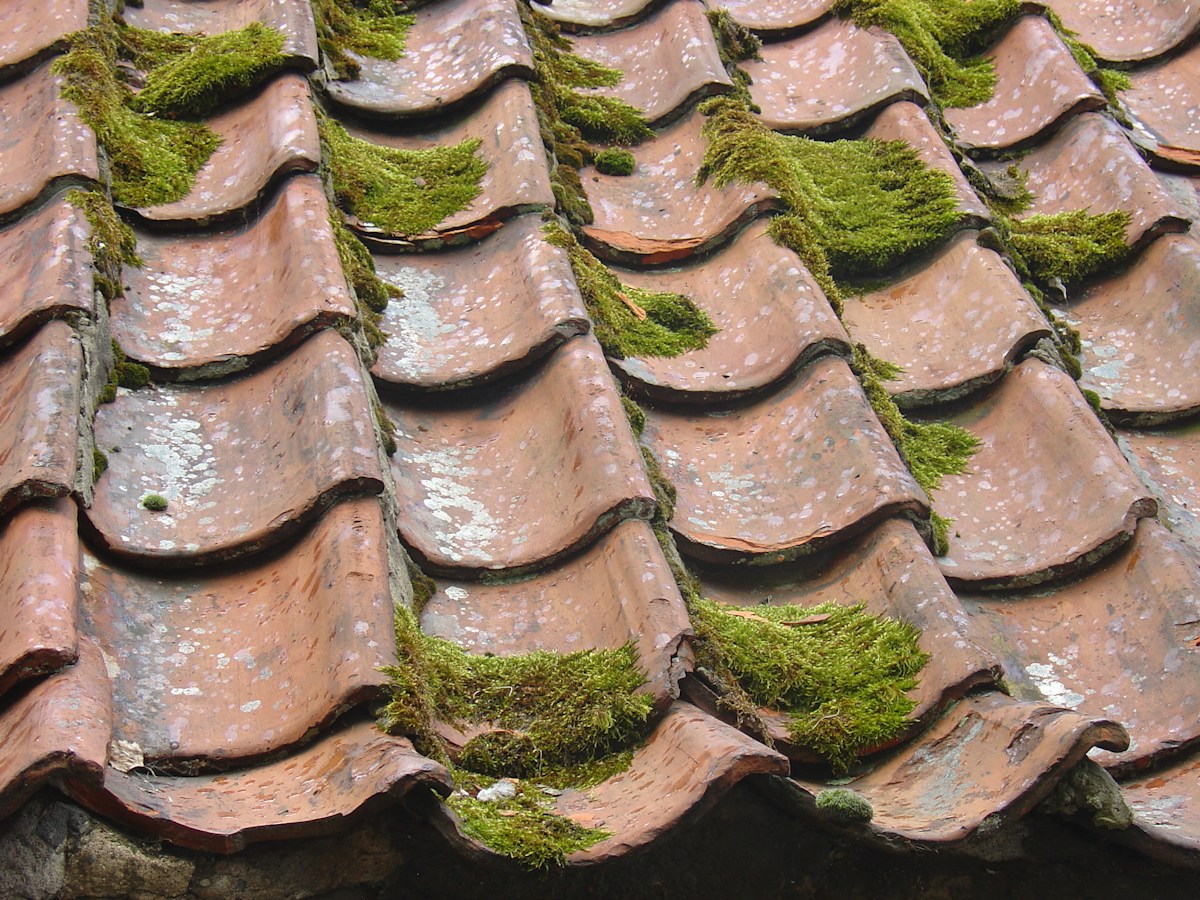
For a Warwick homeowner with an older roof, the exact product may be uncertain. Say so rather than guessing from color. A contractor should be able to distinguish the broad material category and explain what additional identification is needed. The photograph on this page shows moss on clay tiles to make the growth visible. It is not a demonstration of how an asphalt roof should be treated. Material identification is the first filter for every cleaning recommendation.
Dark streaks and raised growth are different observations
Dark streaking can be associated with algae on asphalt shingles, while moss often forms visible green growth with more texture and thickness. Lichen can appear as attached patches with a different structure. Dirt, debris, shadows, and material deterioration can also change appearance.
These are descriptions to guide inspection, not a remote diagnosis from a phone image. Ask the provider what they believe is present and why. The Owens Corning algae bulletin discusses the brown-to-black discoloration associated with algae on asphalt shingles. That appearance concern should be distinguished from a torn shingle, a failed flashing detail, or exposed material. Several conditions can occur on one roof and may need separate responses.
Do not read remaining life from color alone
A cleaner-looking surface does not prove that the covering is sound, and a discolored surface does not by itself establish that replacement is necessary. Ask the inspector to assess the actual material condition separately from the appearance issue.
Useful questions include whether there are damaged or missing shingles, substantial surface deterioration, failed connections, or other defects independent of growth. A cleaning proposal should not promise to restore the roof's original structural or water-management condition. It can address a defined surface condition, subject to the material's suitability for treatment. Keeping those goals separate helps prevent two opposite mistakes: replacing a serviceable roof solely because it looks dark, or cleaning a deteriorated roof as if appearance were the only problem.
Look at why the area stays damp or collects debris
Shade, nearby vegetation, roof orientation, and accumulated debris can influence the conditions on a roof surface. Observe whether the growth is concentrated beneath trees, near a valley, or along an area that dries differently from the rest of the roof.
Do not assume one factor explains everything. A shaded surface can have growth and also contain an unrelated leak. Ask the provider to identify the pattern and any drainage obstruction that needs separate attention. If trees are involved, discuss tree health and pruning with an appropriate tree professional. A roofer can describe roof conditions without deciding how a mature tree should be cut. The goal is to understand the site, not to prescribe the same canopy removal for every property.
Avoid abrasive methods on a delicate surface
Asphalt shingles have a mineral surface that can be damaged by inappropriate force or abrasion. A cleaning method should follow the relevant manufacturer's guidance rather than rely on making the roof look immediately uniform. Pressure washing, aggressive scraping, or unsuitable brushing can create problems that were not present before treatment.
Ask the provider to describe the process, equipment, and product compatibility. “We are careful” is not a method description. If the proposal involves physically removing attached growth, ask how the covering will be protected and why that approach is suitable. Do not test the method on a patch of roof yourself. A small trial can still damage material, create a slippery area, or put you in an unsafe access position.
Let product guidance govern chemical treatment
Different roofing manufacturers provide particular cleaning guidance, and chemical products have their own labels and limitations. The appropriate treatment depends on the material and the identified condition. Do not mix cleaners or substitute a recipe from an unrelated surface.
Ask the provider which guidance and product label they will follow. Discuss protection of landscaping, exterior finishes, runoff routes, pets, and people around the work area. The Oregon State Extension moss resource is useful background on the hazards and considerations of roof treatment. It is not a reason to apply every listed approach to every roof. The proposal should identify the method suitable for your actual covering and the precautions required for the property.
Understand what “soft wash” does and does not specify
“Soft wash” is often used as a marketing label for a lower-pressure cleaning approach. The label alone does not identify the chemicals, concentration, application, dwell time, rinsing, or compatibility with the roof. Ask for the actual process rather than accepting the phrase as a guarantee of safety.
A lower-pressure application can still involve an unsuitable product or poor runoff management. Conversely, a provider who explains a manufacturer-compatible process is giving you information you can evaluate. Put the method and the scope in writing. If the contractor refuses to identify products or says the details are proprietary, ask how you can confirm compatibility and warranty implications. The roof is a building component, not a surface on which appearance is the only success criterion.
Set realistic expectations for the result
Some treatments may not produce an immediately uniform appearance, and some growth may require time or follow-up under the applicable method. Ask what change the provider expects, on what schedule, and what will remain visible. A promise of instant cosmetic perfection can encourage overly aggressive work.
Distinguish residual staining, remaining attached material, and damage that cleaning cannot reverse. If the provider expects a second visit, include it in the written scope. Ask how the result will be assessed without requiring you to climb onto the roof. Use comparable photographs from safe positions. The objective is an appropriate treatment and a clear record, not a dramatic before-and-after image achieved by stripping away part of the roof's own protective surface.
Treat gutters and valleys as separate maintenance tasks
Debris at roof intersections and drainage outlets can deserve removal even when the main complaint is discoloration. Ask whether gutter and valley cleaning is included, how it will be performed safely, and what observations will be documented afterward.
Cleaning the roof surface does not automatically clear every outlet. Likewise, a cleaned gutter does not repair a leaking valley or failed flashing. Put those tasks on separate lines so the work is understandable. If growth or debris has concealed a damaged area, the provider should explain whether additional inspection is needed after treatment. A maintenance visit can reveal a repair need, but the repair should be supported by evidence rather than sold as an unavoidable extra without a location or explanation.
Ask about prevention without expecting a permanent cure
Algae-resistant shingles and certain roof details may be part of a future material choice, but they do not eliminate every maintenance issue. Ask what a product claim covers and how it differs from a general roof warranty. A resistance claim is not a promise that no surface change will ever occur.
If strips or other accessories are proposed, ask whether they are compatible with the covering, what they are intended to address, and how they will be attached without creating new defects. Do not add metal or chemicals to the roof based solely on an online tip. Prevention should fit the material and site. A realistic plan combines appropriate product choices, safe observation, and maintenance of actual drainage conditions.
Separate cleaning, repair, and replacement proposals
A roof may be suitable for cleaning, need a localized repair before cleaning, or be too deteriorated for treatment to be worthwhile. Ask the provider to state which condition they observed and what evidence supports the recommendation. Avoid a bundled proposal that makes these choices impossible to distinguish.
For example, a cracked shingle beside moss growth may need a repair while the growth elsewhere remains a maintenance issue. Broad deterioration may change the discussion entirely. The IKO maintenance guide gives general background, but the property-specific assessment should identify the actual defects. If a cleaning company recommends full replacement, consider a roofing assessment that evaluates the covering independently of the cleaning service being sold.
Keep people off the treated area and out of runoff zones
Moss, algae, water, and cleaning products can make access hazardous. The provider should establish work boundaries and explain when people and pets can return to affected areas. Do not climb up after treatment to check whether a patch has changed.
Ask how exterior equipment, open windows, nearby plants, and drainage outlets will be managed. Tell the provider about sensitive features before work begins. Keep children away from hoses, equipment, and runoff. These are practical site-planning questions, not reasons to abandon appropriate maintenance. A professional process accounts for the house and grounds as well as the roof surface, so the cleaning does not create a second problem below the eaves.
Save the treatment record with the roof records
Keep the date, provider, identified condition, products or method, before-and-after photographs, and any recommendations for follow-up. Record defects that were present before cleaning and any repair performed separately. That information helps a future roofer distinguish treated growth from later deterioration.
The best maintenance decision begins with a material and a diagnosis, then chooses a compatible method and realistic goal. For a shaded Warwick roof, the answer may be a careful treatment, a targeted repair, or a broader assessment. It should not begin with a pressure setting or a promise that every dark surface can be made new. Cleanliness is one outcome; preserving a serviceable covering and its drainage details is the more important one.